January.2022
7 Mins
Digitally Fabricated Provisional Implant Restorations Prior to Implant Placement: A Clinical Case Series
Digitally Fabricated Provisional Implant Restorations Prior to Implant Placement: A Clinical Case Series
Digitally Fabricated Provisional Implant Restorations Prior to Implant Placement: A Clinical Case Series


Hamilton A, Obermaier B, Doliveux S, Negreiros WM, Alnasser M, Gallucci GO
Int J Prosthodont.
Summary
Purpose
To identify what affects the delivery of a CAD/CAM provisional restoration that is designed from the virtual implant plan before surgery, when the implant is placed with static computer-assisted implant surgery (sCAIS).
Materials and methods
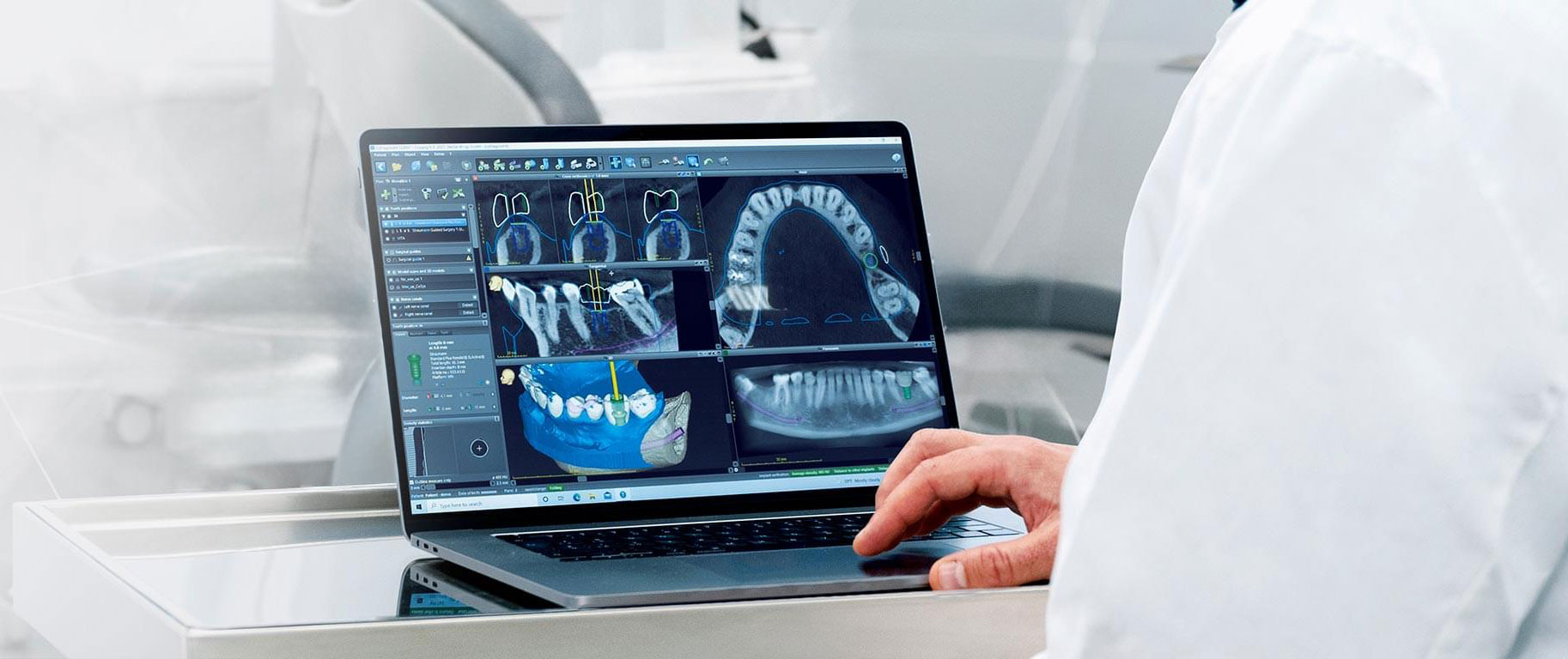
The study included single-tooth implant cases. CBCT data and intraoral scans were merged in implant planning software, which was linked to CAD software where a digital diagnostic tooth setup defined the ideal tooth shape and soft-tissue contours. Once the implant plan was final, its position was transferred to the CAD software to design and fabricate the restoration before surgery. Restorations were delivered on the day of surgery, or after healing when delayed loading or submerged healing was required.
Results
Twenty-three patients with 28 single-implant sites were included. Twenty-nine restorations were prefabricated: 19 custom healing abutments and 10 provisional crowns. Twenty-three were delivered on the day of surgery. None of the factors compared showed a statistically significant difference.
Conclusion
Custom provisional restorations designed from the virtual implant plan can be fabricated before surgery and delivered successfully when the implant is placed with a static surgical guide.
What this means for your practice
When the plan and the guide are accurate, the provisional can be ready before the patient arrives: one digital plan drives both the surgery and the restoration.
Keywords
CAD/CAM, static computer-assisted implant surgery, provisional restoration, custom healing abutment, digital workflow
Source: Int J Prosthodont, 2022 (PubMed)
No technician, no engineer.
Just surgical planning by one dentist for another.
No technician, no engineer.
Just surgical planning by one dentist for another.
No technician, no engineer.
Just surgical planning by one dentist for another.
January.2022
7 Mins
Digitally Fabricated Provisional Implant Restorations Prior to Implant Placement: A Clinical Case Series
Digitally Fabricated Provisional Implant Restorations Prior to Implant Placement: A Clinical Case Series
Digitally Fabricated Provisional Implant Restorations Prior to Implant Placement: A Clinical Case Series
Hamilton A, Obermaier B, Doliveux S, Negreiros WM, Alnasser M, Gallucci GO
Int J Prosthodont.
Summary
Purpose
To identify what affects the delivery of a CAD/CAM provisional restoration that is designed from the virtual implant plan before surgery, when the implant is placed with static computer-assisted implant surgery (sCAIS).
Materials and methods
The study included single-tooth implant cases. CBCT data and intraoral scans were merged in implant planning software, which was linked to CAD software where a digital diagnostic tooth setup defined the ideal tooth shape and soft-tissue contours. Once the implant plan was final, its position was transferred to the CAD software to design and fabricate the restoration before surgery. Restorations were delivered on the day of surgery, or after healing when delayed loading or submerged healing was required.
Results
Twenty-three patients with 28 single-implant sites were included. Twenty-nine restorations were prefabricated: 19 custom healing abutments and 10 provisional crowns. Twenty-three were delivered on the day of surgery. None of the factors compared showed a statistically significant difference.
Conclusion
Custom provisional restorations designed from the virtual implant plan can be fabricated before surgery and delivered successfully when the implant is placed with a static surgical guide.
What this means for your practice
When the plan and the guide are accurate, the provisional can be ready before the patient arrives: one digital plan drives both the surgery and the restoration.
Keywords
CAD/CAM, static computer-assisted implant surgery, provisional restoration, custom healing abutment, digital workflow
Source: Int J Prosthodont, 2022 (PubMed)
No technician, no engineer.
Just surgical planning by one dentist for another.
No technician, no engineer.
Just surgical planning by one dentist for another.
No technician, no engineer.
Just surgical planning by one dentist for another.