April.2024
5 Mins
Guided and Prosthetically Driven Bone Augmentation Using the Shell Technique and Allogeneic Cortical Plate: A Prospective Case Series
Guided and Prosthetically Driven Bone Augmentation Using the Shell Technique and Allogeneic Cortical Plate: A Prospective Case Series
Guided and Prosthetically Driven Bone Augmentation Using the Shell Technique and Allogeneic Cortical Plate: A Prospective Case Series


Doliveux R, Doliveux S.
Int J Oral Maxillofac Implants.
Summary
Purpose
This prospective case series shows how digital planning can fully guide the shell technique for horizontal bone augmentation, using allogeneic cortical plates.
Materials and methods
Ten patients who needed bone augmentation before implant placement were treated. Each allogeneic cortical plate was designed with CAD/CAM to match the thickness of the patient's native cortical bone, then positioned and shaped virtually around the defect based on the existing anatomy. From this digital plan, a cutting pattern for the plate and a surgical template to hold it in place were fabricated.
Results
Twelve horizontal grafts were performed. All were considered successful and allowed the implants to be placed in the ideal three-dimensional position. In 3 of the 12 procedures, the plate needed a small adjustment to reach its ideal position.
Conclusion
A digitally designed template can hold the allogeneic plate in its planned position, making the shell technique more predictable and simpler to perform. The authors note that larger studies are needed to confirm these results.
What this means for your practice
Bone grafting can be planned from the final implant position, the same way the implant itself is planned: the graft is shaped for where the implant needs to go.
Keywords
guided bone regeneration, shell technique, allogeneic cortical plate, CAD/CAM, prosthetically driven planning, surgical template
No technician, no engineer.
Just surgical planning by one dentist for another.
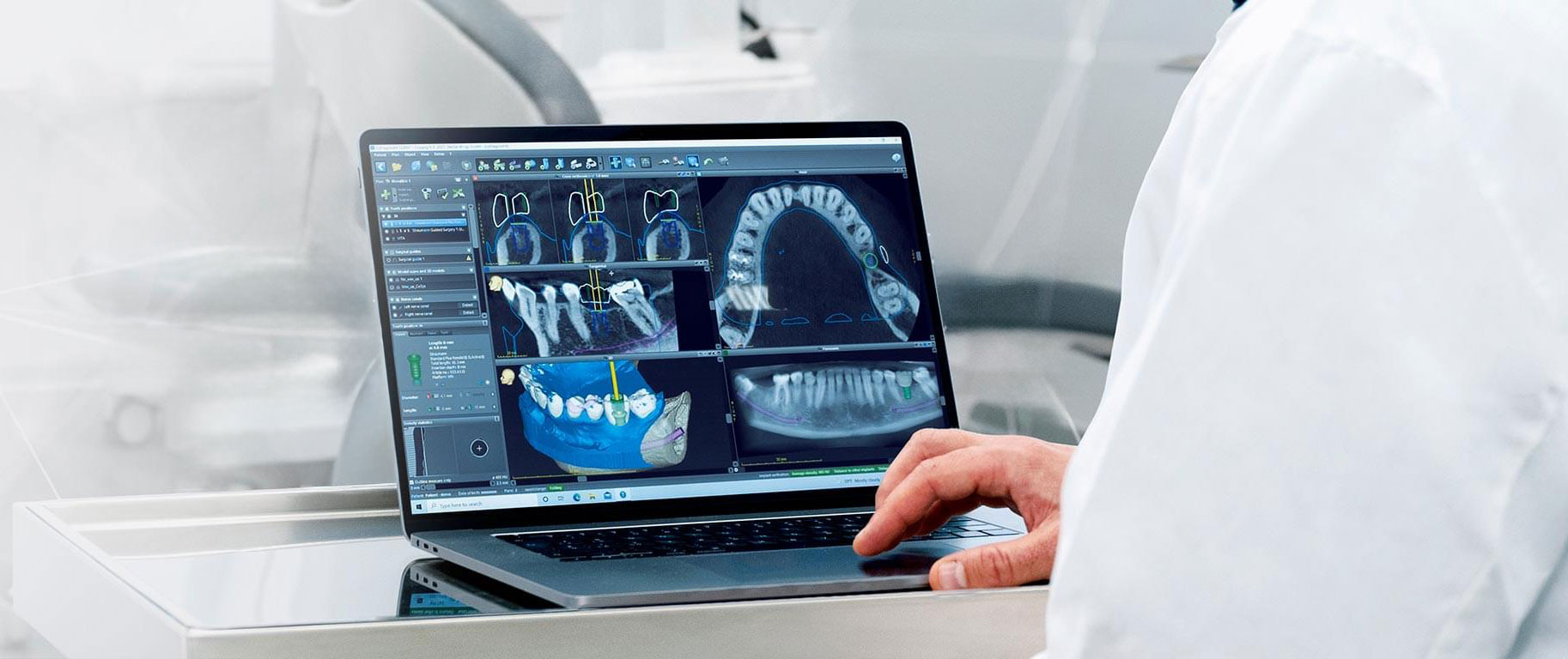
No technician, no engineer.
Just surgical planning by one dentist for another.
No technician, no engineer.
Just surgical planning by one dentist for another.
April.2024
5 Mins
Guided and Prosthetically Driven Bone Augmentation Using the Shell Technique and Allogeneic Cortical Plate: A Prospective Case Series
Guided and Prosthetically Driven Bone Augmentation Using the Shell Technique and Allogeneic Cortical Plate: A Prospective Case Series
Guided and Prosthetically Driven Bone Augmentation Using the Shell Technique and Allogeneic Cortical Plate: A Prospective Case Series
Doliveux R, Doliveux S.
Int J Oral Maxillofac Implants.
Summary
Purpose
This prospective case series shows how digital planning can fully guide the shell technique for horizontal bone augmentation, using allogeneic cortical plates.
Materials and methods
Ten patients who needed bone augmentation before implant placement were treated. Each allogeneic cortical plate was designed with CAD/CAM to match the thickness of the patient's native cortical bone, then positioned and shaped virtually around the defect based on the existing anatomy. From this digital plan, a cutting pattern for the plate and a surgical template to hold it in place were fabricated.
Results
Twelve horizontal grafts were performed. All were considered successful and allowed the implants to be placed in the ideal three-dimensional position. In 3 of the 12 procedures, the plate needed a small adjustment to reach its ideal position.
Conclusion
A digitally designed template can hold the allogeneic plate in its planned position, making the shell technique more predictable and simpler to perform. The authors note that larger studies are needed to confirm these results.
What this means for your practice
Bone grafting can be planned from the final implant position, the same way the implant itself is planned: the graft is shaped for where the implant needs to go.
Keywords
guided bone regeneration, shell technique, allogeneic cortical plate, CAD/CAM, prosthetically driven planning, surgical template
No technician, no engineer.
Just surgical planning by one dentist for another.
No technician, no engineer.
Just surgical planning by one dentist for another.
No technician, no engineer.
Just surgical planning by one dentist for another.