March.2021
3 Mins
Inflammation of the Periodontium Associates with Risk of Future Cardiovascular Events
Inflammation of the Periodontium Associates with Risk of Future Cardiovascular Events
Inflammation of the Periodontium Associates with Risk of Future Cardiovascular Events


Van Dyke TE, Kholy KE, Ishai A, Takx RAP, Mezue K, Abohashem SM, Ali A, Yuan N, Hsue P, Osborne MT, Tawakol A
J Periodontol.
Summary
Background
Periodontal disease and cardiovascular disease are often linked, but it was unclear whether the link is independent of shared risk factors, and through which mechanism. This study tested whether active inflammation of the periodontium predicts future cardiovascular events, and whether arterial inflammation explains the connection.
Materials and methods
Inflammation of the periodontium and of the arteries was measured on 18F-FDG PET/CT scans of 304 adults (median age 54; 42% men), imaged mostly for cancer screening and without active cancer. Participants were then followed for major adverse cardiovascular events (MACE).
Results
Over a median follow-up of 4.1 years, 13 participants had a major cardiovascular event. Periodontal inflammation was associated with arterial inflammation, even after adjusting for periodontal and cardiovascular risk factors. It also predicted future events (standardized hazard ratio 2.25), while periodontal bone loss did not. Arterial inflammation accounted for about 80% of the link between periodontal inflammation and cardiovascular events.
Conclusion
Active inflammation of the periodontium, rather than bone loss alone, is independently associated with future cardiovascular events, possibly through increased inflammation of the arteries.
Keywords
periodontal inflammation, cardiovascular disease, atherosclerosis, FDG-PET/CT, oral-systemic health
Source: J Periodontol, 2021 (PubMed)
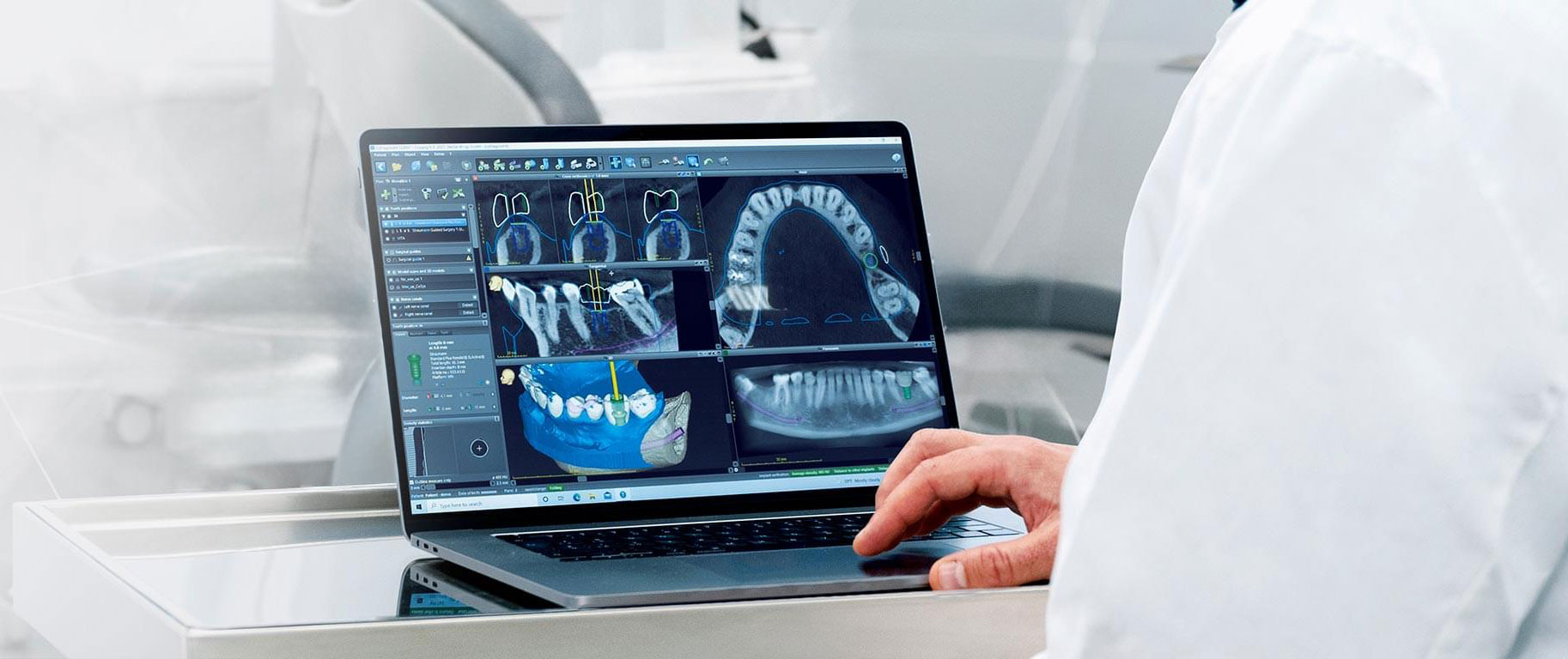
No technician, no engineer.
Just surgical planning by one dentist for another.
No technician, no engineer.
Just surgical planning by one dentist for another.
No technician, no engineer.
Just surgical planning by one dentist for another.
March.2021
3 Mins
Inflammation of the Periodontium Associates with Risk of Future Cardiovascular Events
Inflammation of the Periodontium Associates with Risk of Future Cardiovascular Events
Inflammation of the Periodontium Associates with Risk of Future Cardiovascular Events
Van Dyke TE, Kholy KE, Ishai A, Takx RAP, Mezue K, Abohashem SM, Ali A, Yuan N, Hsue P, Osborne MT, Tawakol A
J Periodontol.
Summary
Background
Periodontal disease and cardiovascular disease are often linked, but it was unclear whether the link is independent of shared risk factors, and through which mechanism. This study tested whether active inflammation of the periodontium predicts future cardiovascular events, and whether arterial inflammation explains the connection.
Materials and methods
Inflammation of the periodontium and of the arteries was measured on 18F-FDG PET/CT scans of 304 adults (median age 54; 42% men), imaged mostly for cancer screening and without active cancer. Participants were then followed for major adverse cardiovascular events (MACE).
Results
Over a median follow-up of 4.1 years, 13 participants had a major cardiovascular event. Periodontal inflammation was associated with arterial inflammation, even after adjusting for periodontal and cardiovascular risk factors. It also predicted future events (standardized hazard ratio 2.25), while periodontal bone loss did not. Arterial inflammation accounted for about 80% of the link between periodontal inflammation and cardiovascular events.
Conclusion
Active inflammation of the periodontium, rather than bone loss alone, is independently associated with future cardiovascular events, possibly through increased inflammation of the arteries.
Keywords
periodontal inflammation, cardiovascular disease, atherosclerosis, FDG-PET/CT, oral-systemic health
Source: J Periodontol, 2021 (PubMed)
No technician, no engineer.
Just surgical planning by one dentist for another.
No technician, no engineer.
Just surgical planning by one dentist for another.
No technician, no engineer.
Just surgical planning by one dentist for another.