Nov 2026
8 Mins
Prefabricated Components in Implant Dentistry: Why Guided Surgery Accuracy Matters
Prefabricated Components in Implant Dentistry: Why Guided Surgery Accuracy Matters
Prefabricated Components in Implant Dentistry: Why Guided Surgery Accuracy Matters

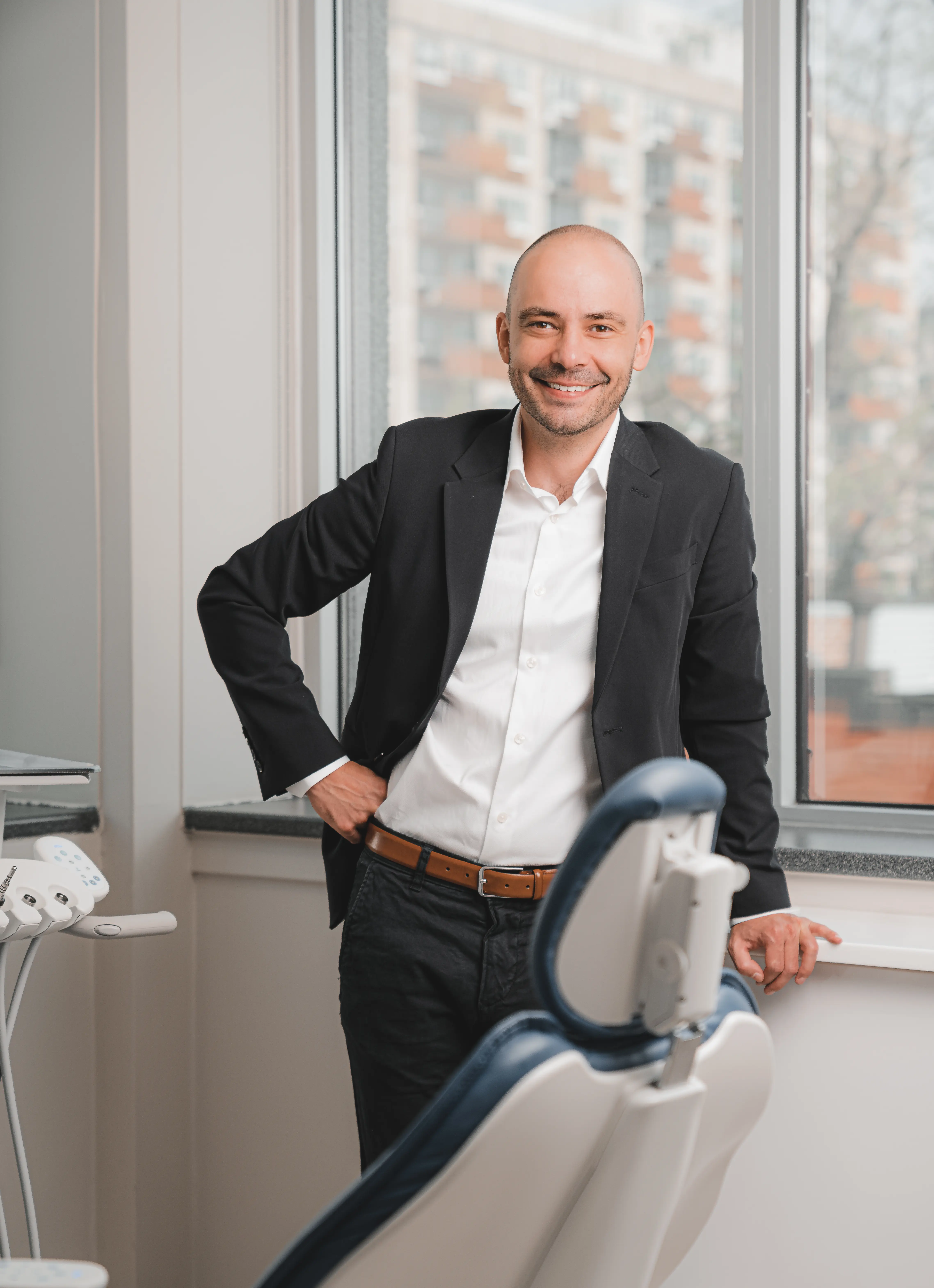
Dr. Simon Doliveux
DDS, MMSc
Placing a provisional crown or a customized healing abutment at the time of implant placement offers many advantages, which are increasingly used in implant dentistry.
First, it closes the surgical site, particularly in immediate implant placement after extraction. It also allows the emergence profile to be developed during the healing and osseointegration phase of the implant.
For a provisional crown, it also provides immediate esthetics and replaces the missing tooth.
These components can of course be fabricated intraoperatively, that is, chairside at the time of implant placement.
But they can also be prefabricated using CAD/CAM, based on the implant position planned on the computer.
One of the major advantages of these prefabricated components is the time saved. Instead of being fabricated at the time of implant placement, they are already made and ready to be delivered.
This requires guided surgery, whose role is to transfer the position planned on the computer into the patient’s mouth. This planned position must therefore be reproduced as precisely as possible so that the component prefabricated from it can be delivered.
Guided surgery that is not accurate enough, or the inability to complete the surgery in a guided fashion, can prevent the prefabricated component from being delivered.
The prefabricated component will only work if the implant is placed according to the plan, including its depth but also its rotation, so that the prosthetic connection matches.
Several factors can affect the accuracy of guided surgery, whether anatomical, related to the socket, or related to the design and accuracy of the surgical guide.
This process is described in two articles I co-authored. The first is one of the first articles to describe the use of customized healing abutments in the esthetic zone [1]. The second is a clinical case series on prefabricated components delivered after static computer-assisted implant surgery (sCAIS) [2].
What is a CAD/CAM customized healing abutment?
A customized healing abutment replaces the traditional healing abutment offered by implant companies.
In immediate implant placement after extraction, a customized healing abutment preserves the gingival architecture of the tooth that has just been extracted and develops the emergence profile of the implant during healing.
Compared with a traditional healing abutment, it provides better support and preservation of the peri-implant gingival architecture [1].
It also closes the immediate implant site and contains the bone graft material [1].
It allows us to avoid an implant uncovering surgery and to limit soft tissue manipulation [1].
It also reduces the risk of load on the implant, particularly when primary stability is not sufficient to support a full provisional crown.
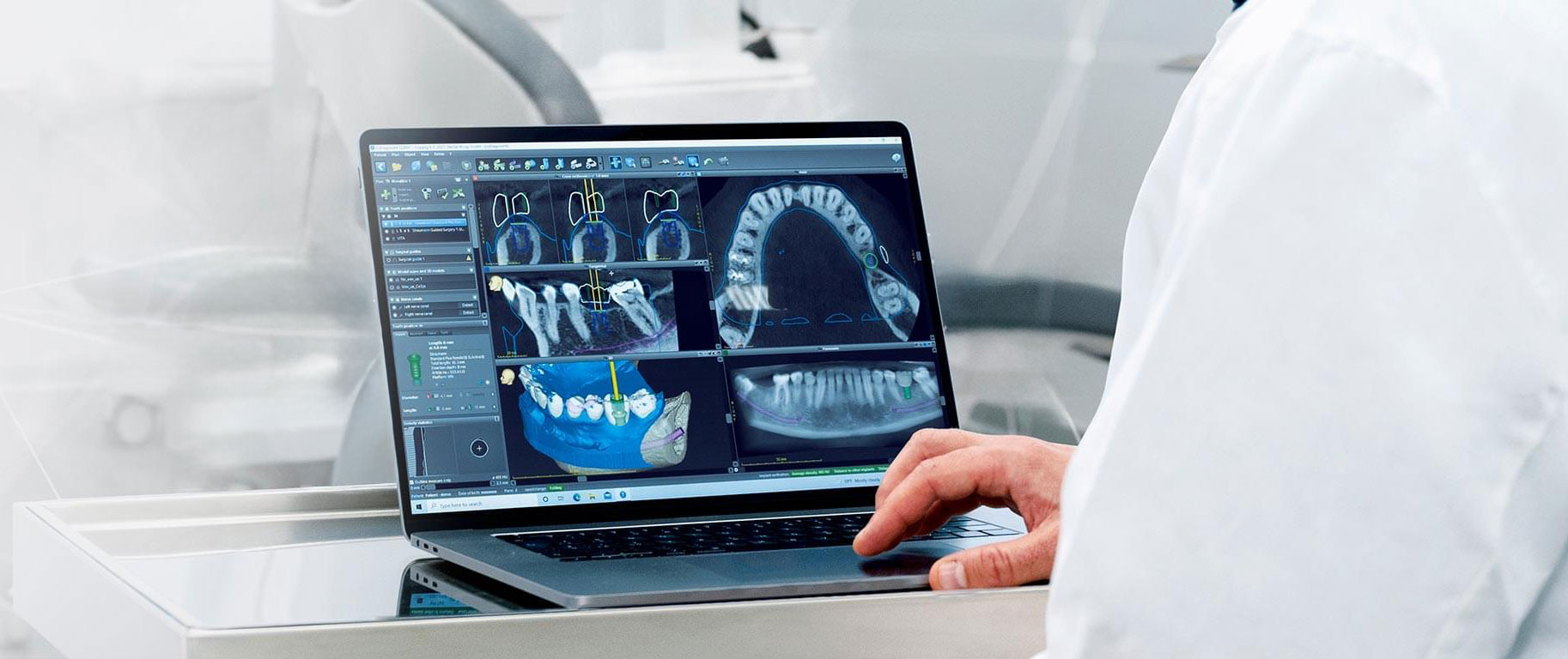
In the digital workflow, planning relies on a CBCT scan and an intraoral scan that digitally reproduce the patient.
Once the implant position is planned, the planning software can either be connected to a CAD/CAM station, or the files can be exported, including an STL file of the digital impression with a scan body reproducing the planned implant position.
From these files, a customized healing abutment or a customized provisional crown can be created before the implant surgery is even performed [1, 2].

What do the studies show?
In the clinical case series, 23 patients were studied, representing 28 implant sites [2].
A total of 29 restorations, including 19 customized healing abutments and 10 provisional crowns, were designed with CAD/CAM and milled.
All implants were placed in a fully guided fashion, using a tooth-supported guide.
The key insight from this study is understanding why some prefabricated components could not be delivered at the time of surgery.
In five of the six failures, there was a lack of primary stability that led to a change in the surgical protocol, either through a change in implant size, potentially modifying its position, or through the inability to complete the surgery in a fully guided fashion [2].
In other words, it was not the prefabricated component that failed, but the final position of the implant in the patient’s mouth that no longer sufficiently reflected the position initially planned on the computer.
When guided surgery was performed according to the implant plan, 20 prefabricated components were delivered without any particular modification. Only three required minor adjustments [2].

Why accuracy decides the outcome
In this type of workflow, accuracy is indispensable at every step of digital planning.
The final implant position depends on every step performed beforehand, and on the potential errors that may have accumulated from data acquisition to implant surgery [2].
1. Registration of the CBCT and intraoral scans
This step of digitally reproducing the patient is fundamental.
It can be performed with artificial intelligence, which offers tools to facilitate registration, but it must always be verified manually.
Some techniques can be used, particularly when restorations on natural teeth create artifacts, such as radiopaque markers to improve the accuracy of file registration [2].
It is also important to note that a small-volume CBCT can make registration more difficult, due to a lack of common reference points between the intraoral scans and the CBCT [2].
2. Implant position and primary stability
Primary stability is not decided only at the time of surgery. It is decided at the planning stage.
The available bone volume, the implant position, the bone density, the diameter and length of the chosen implant, as well as its shape and design, are a set of parameters that influence primary stability and are determined at the planning stage.
Unfortunately, if primary stability is not achieved, we know that the prefabricated component may not be deliverable, a particularly complex situation in immediate implant placement.
This may force the surgeon to change the implant size or modify the osteotomy, and therefore change the planned implant position, which can then prevent the prefabricated components from being delivered.
3. Rotational position of the implant
The prefabricated component sits on a prosthetic abutment with an engaging section inside the implant.
If the implant rotation does not stop at the right place, it will be impossible to engage the prefabricated component inside the implant.
To obtain the correct rotational position, implant planning allows a marker to be created on the surgical guide, indicating the rotational orientation in which the implant must be positioned [1, 2].
The surgical guide must therefore control not only depth and angulation, but also the rotational position of the implant.
4. Strictly follow the surgical protocol
Any error or modification of the guided surgery protocol at the time of surgery can compromise the outcome.
Some clinicians use a surgical guide only for the pilot drill or the osteotomy drills, then decide to place the implant freehand.
In these conditions, delivering the prefabricated component may not work, because the final implant position will not reproduce the position initially planned on the computer faithfully enough.
It is also important to recognize that guided surgery is never 100% accurate.
Several studies show that deviations always exist and that a perfectly faithful reproduction does not exist.
However, errors can be minimized as much as possible to achieve the best possible accuracy and allow this type of prefabricated component to be delivered. For this, high-quality implant planning is fundamental.
What does this mean for implant planning, and how can D2D help?
At D2D, every case is planned by either Dr. Doliveux or Dr. El Kholy, two clinicians with recognized experience in guided surgery.
When a case requires a prefabricated component, implant planning is fundamental and its accuracy becomes decisive.
Recognizing all the anatomical parameters, such as bone density, socket shape, and the choice of implant length, platform and shape, makes it possible to anticipate what is needed to achieve sufficient primary stability and the most accurate implant position. All of these factors must also be taken into account to support the most faithful reproduction possible of the planned implant position.
D2D can provide you with the implant planning and the surgical guide.
Since we have the planned implant position, we can also send you an STL file of the intraoral scan with a scan body representing this planned position.
This file reproduces a situation comparable to a conventional clinical impression taken in the mouth with a scan body.
You can then use this file to have a prefabricated component made, by your laboratory or by yourself, whether a provisional crown or a customized healing abutment.
That is how D2D can help you succeed with this type of procedure.
FAQ
Why does a customized healing abutment require guided surgery?
Because this component is prefabricated, that is, made before surgery based on a planned implant position, it is important that this position be reproduced as precisely as possible in the patient’s mouth.
In the published workflow, every case was performed with a fully guided surgical protocol and rotational markers on the surgical guides [1, 2].
What is the main reason a prefabricated component cannot be delivered?
In the clinical case series, lack of primary stability was the main issue [2].
This required a change in implant size or diameter, or in the surgical protocol, making it impossible to deliver the prefabricated component when the final position no longer matched the position planned on the computer.
It is worth noting, however, that implant companies increasingly offer implants of different diameters with the same connection.
Therefore, if primary stability is judged insufficient with an implant of a given diameter, it may be possible to increase the implant diameter while keeping a connection compatible with the prefabricated component.
If this new implant can be placed in a fully guided fashion, following its surgical protocol and rotational positioning, the prefabricated component may still be delivered.
Can a customized healing abutment be used in the esthetic zone?
Yes.
One of the articles mentioned describes the use of a customized healing abutment in the esthetic zone [1].
It helps maintain the peri-implant gingival architecture from immediate implant placement through implant healing, supporting the esthetic outcome of the peri-implant tissues.
Can a small-volume CBCT affect accuracy?
Yes, a small-volume CBCT can affect accuracy if it does not contain enough common reference points with the digital intraoral impression.
This can make accurate registration of the two files difficult, and registration is a fundamental step in planning and guided surgery.
Plan your next guided case with D2D
Create your account at www.d2dplanning.com and request planning for your next guided surgery case. Your case will be planned personally by Dr. Doliveux, with an STL surgical guide delivered in 3–5 business days that you can print in your clinic, or you can request the printed guide to be shipped directly to you!
About the author
Dr. Simon Doliveux is co-founder of D2D Planning. He completed a three-year postdoctoral program in implant dentistry at the Harvard School of Dental Medicine. An ITI Fellow and international speaker, he dedicates his practice exclusively to implant surgery and implant prosthetic rehabilitation.
References
[1] Doliveux S, Jamjoom FZ, Finelle G, Hamilton A, Gallucci GO. Preservation of soft tissue contours using computer-aided design/computer-assisted manufacturing healing abutment with guided surgery in the esthetic area: case report. Int J Oral Maxillofac Implants. 2020;35(1):e15–e20. doi:10.11607/jomi.7668
[2] Hamilton A, Obermaier B, Doliveux S, Negreiros WM, Alnasser M, Gallucci GO. Digitally fabricated provisional implant restorations prior to implant placement: a clinical case series. Int J Prosthodont. 2022;35(1):94–108. doi:10.11607/ijp.7623
No technician, no engineer.
Just surgical planning by one dentist for another.
No technician, no engineer.
Just surgical planning by one dentist for another.
No technician, no engineer.
Just surgical planning by one dentist for another.
Nov 2026
8 Mins
Prefabricated Components in Implant Dentistry: Why Guided Surgery Accuracy Matters
Prefabricated Components in Implant Dentistry: Why Guided Surgery Accuracy Matters
Prefabricated Components in Implant Dentistry: Why Guided Surgery Accuracy Matters
Dr. Simon Doliveux
DDS, MMSc
Placing a provisional crown or a customized healing abutment at the time of implant placement offers many advantages, which are increasingly used in implant dentistry.
First, it closes the surgical site, particularly in immediate implant placement after extraction. It also allows the emergence profile to be developed during the healing and osseointegration phase of the implant.
For a provisional crown, it also provides immediate esthetics and replaces the missing tooth.
These components can of course be fabricated intraoperatively, that is, chairside at the time of implant placement.
But they can also be prefabricated using CAD/CAM, based on the implant position planned on the computer.
One of the major advantages of these prefabricated components is the time saved. Instead of being fabricated at the time of implant placement, they are already made and ready to be delivered.
This requires guided surgery, whose role is to transfer the position planned on the computer into the patient’s mouth. This planned position must therefore be reproduced as precisely as possible so that the component prefabricated from it can be delivered.
Guided surgery that is not accurate enough, or the inability to complete the surgery in a guided fashion, can prevent the prefabricated component from being delivered.
The prefabricated component will only work if the implant is placed according to the plan, including its depth but also its rotation, so that the prosthetic connection matches.
Several factors can affect the accuracy of guided surgery, whether anatomical, related to the socket, or related to the design and accuracy of the surgical guide.
This process is described in two articles I co-authored. The first is one of the first articles to describe the use of customized healing abutments in the esthetic zone [1]. The second is a clinical case series on prefabricated components delivered after static computer-assisted implant surgery (sCAIS) [2].
What is a CAD/CAM customized healing abutment?
A customized healing abutment replaces the traditional healing abutment offered by implant companies.
In immediate implant placement after extraction, a customized healing abutment preserves the gingival architecture of the tooth that has just been extracted and develops the emergence profile of the implant during healing.
Compared with a traditional healing abutment, it provides better support and preservation of the peri-implant gingival architecture [1].
It also closes the immediate implant site and contains the bone graft material [1].
It allows us to avoid an implant uncovering surgery and to limit soft tissue manipulation [1].
It also reduces the risk of load on the implant, particularly when primary stability is not sufficient to support a full provisional crown.
In the digital workflow, planning relies on a CBCT scan and an intraoral scan that digitally reproduce the patient.
Once the implant position is planned, the planning software can either be connected to a CAD/CAM station, or the files can be exported, including an STL file of the digital impression with a scan body reproducing the planned implant position.
From these files, a customized healing abutment or a customized provisional crown can be created before the implant surgery is even performed [1, 2].
What do the studies show?
In the clinical case series, 23 patients were studied, representing 28 implant sites [2].
A total of 29 restorations, including 19 customized healing abutments and 10 provisional crowns, were designed with CAD/CAM and milled.
All implants were placed in a fully guided fashion, using a tooth-supported guide.
The key insight from this study is understanding why some prefabricated components could not be delivered at the time of surgery.
In five of the six failures, there was a lack of primary stability that led to a change in the surgical protocol, either through a change in implant size, potentially modifying its position, or through the inability to complete the surgery in a fully guided fashion [2].
In other words, it was not the prefabricated component that failed, but the final position of the implant in the patient’s mouth that no longer sufficiently reflected the position initially planned on the computer.
When guided surgery was performed according to the implant plan, 20 prefabricated components were delivered without any particular modification. Only three required minor adjustments [2].
Why accuracy decides the outcome
In this type of workflow, accuracy is indispensable at every step of digital planning.
The final implant position depends on every step performed beforehand, and on the potential errors that may have accumulated from data acquisition to implant surgery [2].
1. Registration of the CBCT and intraoral scans
This step of digitally reproducing the patient is fundamental.
It can be performed with artificial intelligence, which offers tools to facilitate registration, but it must always be verified manually.
Some techniques can be used, particularly when restorations on natural teeth create artifacts, such as radiopaque markers to improve the accuracy of file registration [2].
It is also important to note that a small-volume CBCT can make registration more difficult, due to a lack of common reference points between the intraoral scans and the CBCT [2].
2. Implant position and primary stability
Primary stability is not decided only at the time of surgery. It is decided at the planning stage.
The available bone volume, the implant position, the bone density, the diameter and length of the chosen implant, as well as its shape and design, are a set of parameters that influence primary stability and are determined at the planning stage.
Unfortunately, if primary stability is not achieved, we know that the prefabricated component may not be deliverable, a particularly complex situation in immediate implant placement.
This may force the surgeon to change the implant size or modify the osteotomy, and therefore change the planned implant position, which can then prevent the prefabricated components from being delivered.
3. Rotational position of the implant
The prefabricated component sits on a prosthetic abutment with an engaging section inside the implant.
If the implant rotation does not stop at the right place, it will be impossible to engage the prefabricated component inside the implant.
To obtain the correct rotational position, implant planning allows a marker to be created on the surgical guide, indicating the rotational orientation in which the implant must be positioned [1, 2].
The surgical guide must therefore control not only depth and angulation, but also the rotational position of the implant.
4. Strictly follow the surgical protocol
Any error or modification of the guided surgery protocol at the time of surgery can compromise the outcome.
Some clinicians use a surgical guide only for the pilot drill or the osteotomy drills, then decide to place the implant freehand.
In these conditions, delivering the prefabricated component may not work, because the final implant position will not reproduce the position initially planned on the computer faithfully enough.
It is also important to recognize that guided surgery is never 100% accurate.
Several studies show that deviations always exist and that a perfectly faithful reproduction does not exist.
However, errors can be minimized as much as possible to achieve the best possible accuracy and allow this type of prefabricated component to be delivered. For this, high-quality implant planning is fundamental.
What does this mean for implant planning, and how can D2D help?
At D2D, every case is planned by either Dr. Doliveux or Dr. El Kholy, two clinicians with recognized experience in guided surgery.
When a case requires a prefabricated component, implant planning is fundamental and its accuracy becomes decisive.
Recognizing all the anatomical parameters, such as bone density, socket shape, and the choice of implant length, platform and shape, makes it possible to anticipate what is needed to achieve sufficient primary stability and the most accurate implant position. All of these factors must also be taken into account to support the most faithful reproduction possible of the planned implant position.
D2D can provide you with the implant planning and the surgical guide.
Since we have the planned implant position, we can also send you an STL file of the intraoral scan with a scan body representing this planned position.
This file reproduces a situation comparable to a conventional clinical impression taken in the mouth with a scan body.
You can then use this file to have a prefabricated component made, by your laboratory or by yourself, whether a provisional crown or a customized healing abutment.
That is how D2D can help you succeed with this type of procedure.
FAQ
Why does a customized healing abutment require guided surgery?
Because this component is prefabricated, that is, made before surgery based on a planned implant position, it is important that this position be reproduced as precisely as possible in the patient’s mouth.
In the published workflow, every case was performed with a fully guided surgical protocol and rotational markers on the surgical guides [1, 2].
What is the main reason a prefabricated component cannot be delivered?
In the clinical case series, lack of primary stability was the main issue [2].
This required a change in implant size or diameter, or in the surgical protocol, making it impossible to deliver the prefabricated component when the final position no longer matched the position planned on the computer.
It is worth noting, however, that implant companies increasingly offer implants of different diameters with the same connection.
Therefore, if primary stability is judged insufficient with an implant of a given diameter, it may be possible to increase the implant diameter while keeping a connection compatible with the prefabricated component.
If this new implant can be placed in a fully guided fashion, following its surgical protocol and rotational positioning, the prefabricated component may still be delivered.
Can a customized healing abutment be used in the esthetic zone?
Yes.
One of the articles mentioned describes the use of a customized healing abutment in the esthetic zone [1].
It helps maintain the peri-implant gingival architecture from immediate implant placement through implant healing, supporting the esthetic outcome of the peri-implant tissues.
Can a small-volume CBCT affect accuracy?
Yes, a small-volume CBCT can affect accuracy if it does not contain enough common reference points with the digital intraoral impression.
This can make accurate registration of the two files difficult, and registration is a fundamental step in planning and guided surgery.
Plan your next guided case with D2D
Create your account at www.d2dplanning.com and request planning for your next guided surgery case. Your case will be planned personally by Dr. Doliveux, with an STL surgical guide delivered in 3–5 business days that you can print in your clinic, or you can request the printed guide to be shipped directly to you!
About the author
Dr. Simon Doliveux is co-founder of D2D Planning. He completed a three-year postdoctoral program in implant dentistry at the Harvard School of Dental Medicine. An ITI Fellow and international speaker, he dedicates his practice exclusively to implant surgery and implant prosthetic rehabilitation.
References
[1] Doliveux S, Jamjoom FZ, Finelle G, Hamilton A, Gallucci GO. Preservation of soft tissue contours using computer-aided design/computer-assisted manufacturing healing abutment with guided surgery in the esthetic area: case report. Int J Oral Maxillofac Implants. 2020;35(1):e15–e20. doi:10.11607/jomi.7668
[2] Hamilton A, Obermaier B, Doliveux S, Negreiros WM, Alnasser M, Gallucci GO. Digitally fabricated provisional implant restorations prior to implant placement: a clinical case series. Int J Prosthodont. 2022;35(1):94–108. doi:10.11607/ijp.7623
No technician, no engineer.
Just surgical planning by one dentist for another.
No technician, no engineer.
Just surgical planning by one dentist for another.
No technician, no engineer.
Just surgical planning by one dentist for another.